Lighter. Stiffer. Built to perform.
We engineer the structures and mechanisms of our own unmanned systems — and of high-performance products for defense, motorsport and industry. Detailed CAD, structural analysis, tolerances and materials, designed directly against the machines we run in-house, so what we draw is what we can build.
Design for in-house manufacturing · Structural analysis · QMS aligned with EN 9100 (in progress)
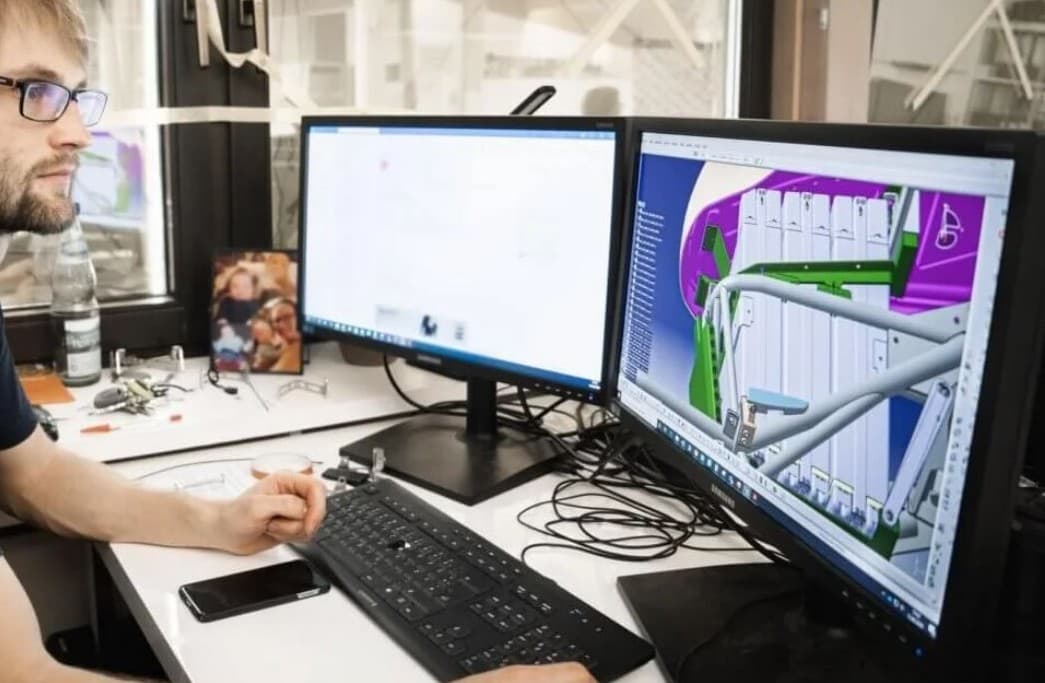
- PROJECTS ENGINEERED IN-HOUSE
- 30+
- Structural mass vs. first iteration
- −40%
- CAD to first physical part
- 1 DAYS
- Design, analysis, production
- 1 team
Engineered by us. Proven by us.
A mechanism is more than its CAD model. Our designs are proven where it matters — under real loads, vibration and impacts.
What we engineer.
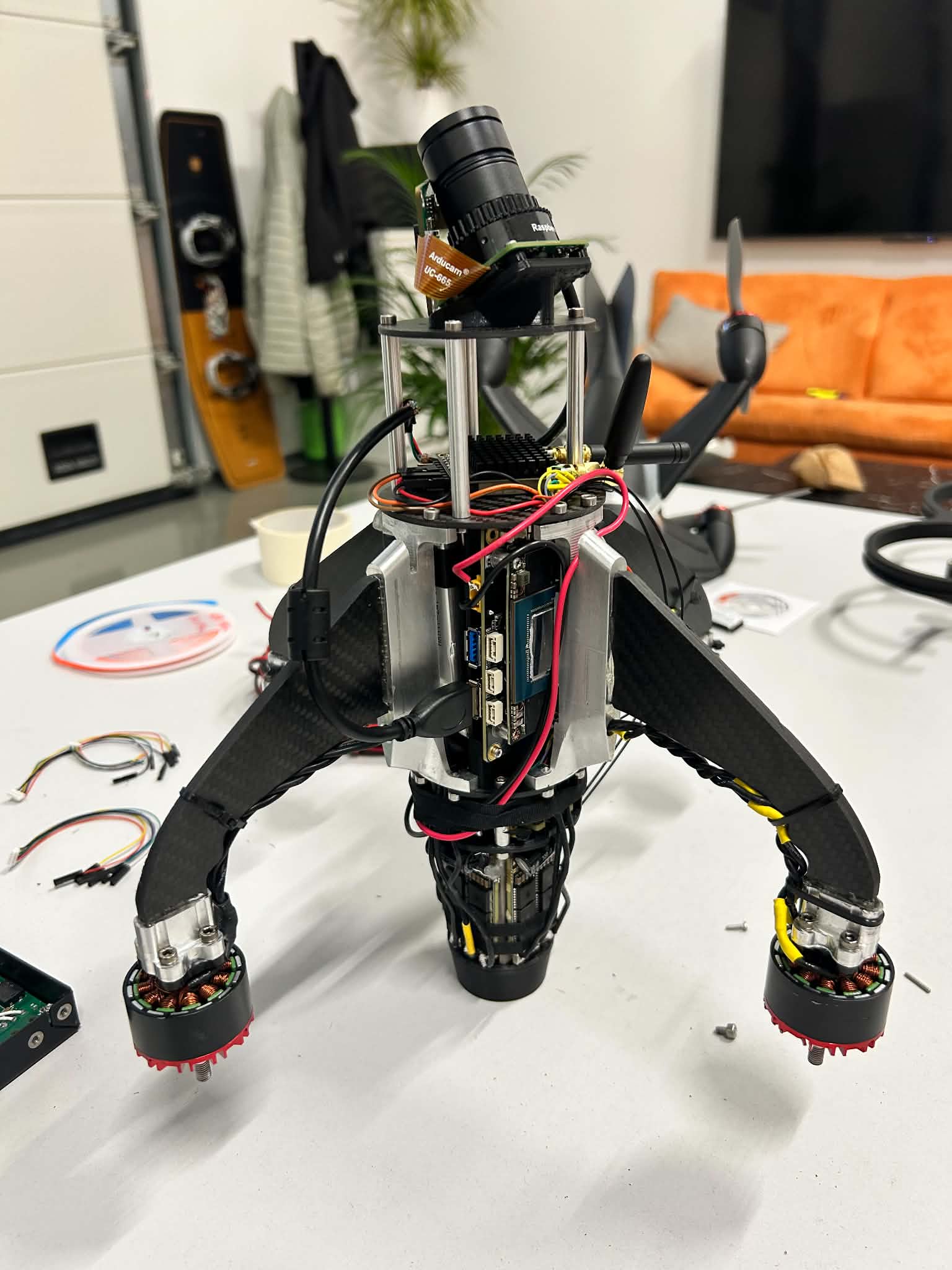
Lightweight structures
Every gram justified by a load path.
- Primary and secondary structures
- Composite and hybrid metal designs
- Modular, field-repairable layouts
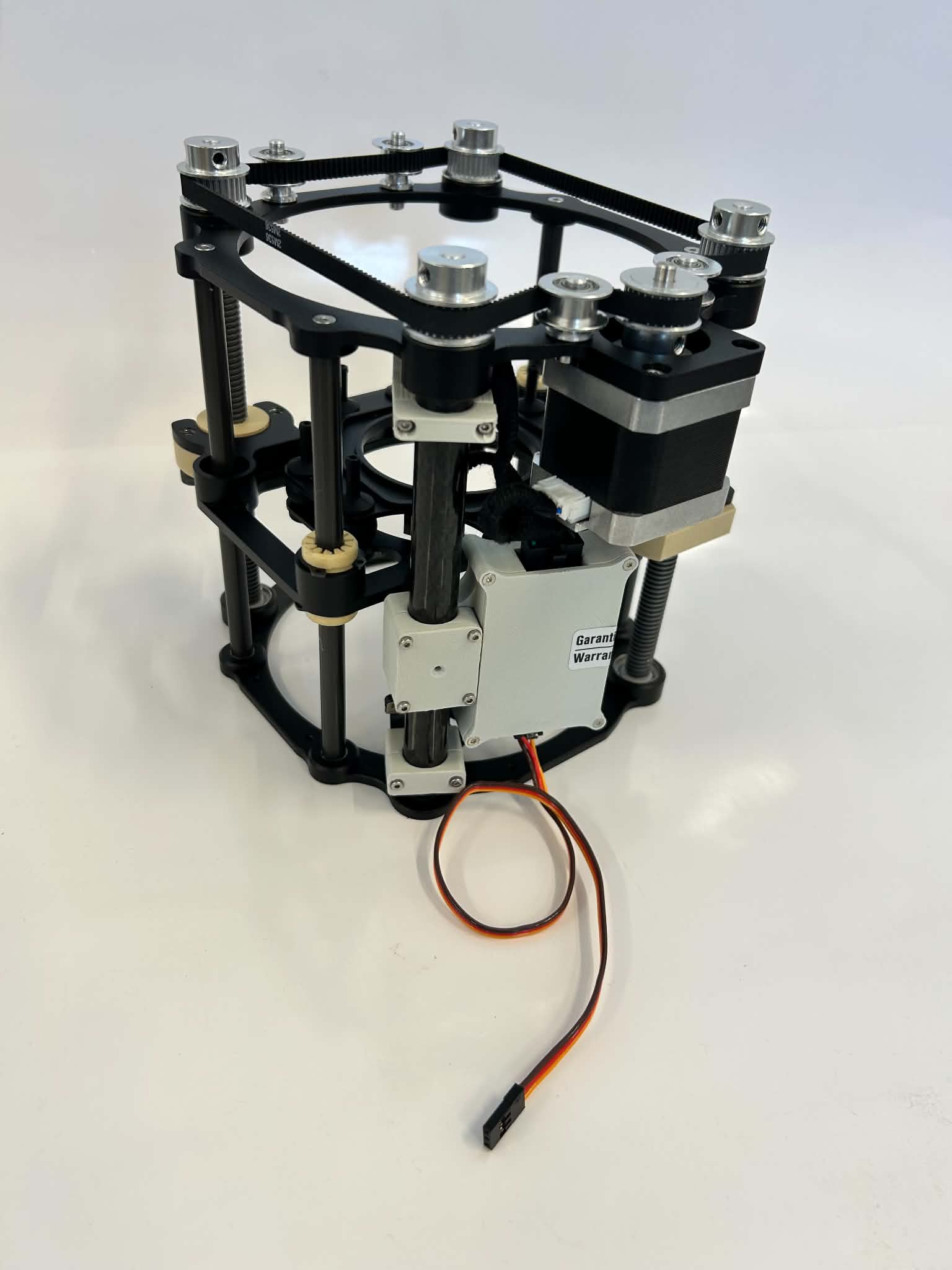
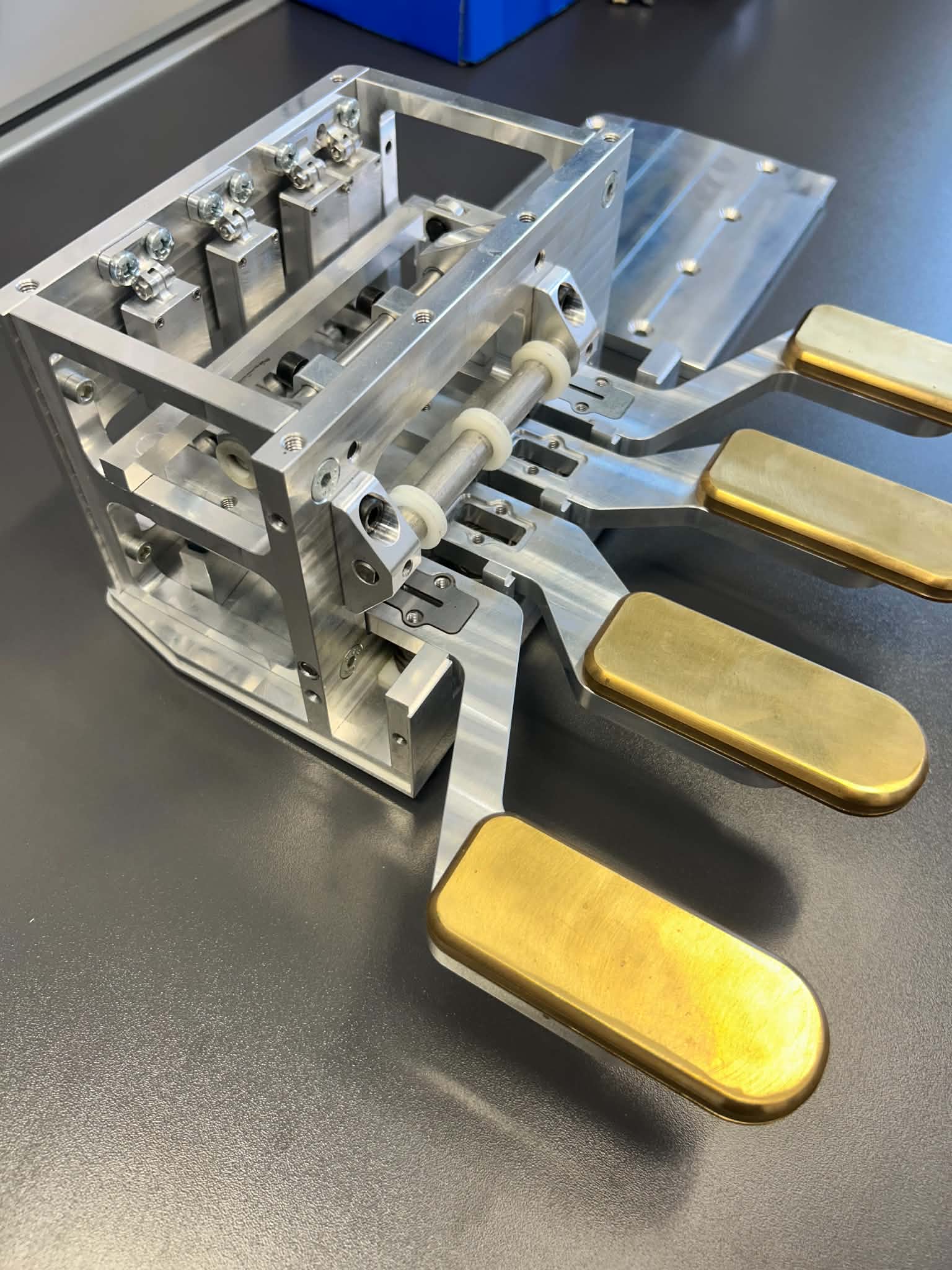
Mechanisms
Parts that move, reliably, thousands of times.
- Folding arms, hinges, locks
- Release and deployment mechanisms
- Kinematics and actuation
Enclosures & thermal
Housings that protect and cool the electronics inside.
- Electronics housings, co-designed with PCBs
- Sealing to IP rating.
- Heat paths for Jetson-class compute
Payload integration
Sensors and payloads mounted to work under vibration and g-loads.
- Camera and sensor mounts, gimbals
- Vibration isolation
- Quick-release and modular interfaces
Calculated before it's cut.
Interfaces, clearances, materials and assembly order decide how a design behaves in the real world. We verify them in analysis first — and then on the test bench.
- Structural FEA
- Static, modal and fatigue analysis of load-bearing parts in ANSYS / SolidWorks Simulation
- Vibration
- Natural frequencies kept clear of motor, propeller and drivetrain excitation
- Tolerances
- Tolerance stack-up analysis, GD&T to ISO 1101 / ASME Y14.5
- Materials
- Selection for strength-to-weight, temperature range, corrosion and availability
- Mass budget
- Tracked per component from concept to release
Designed for the machines next door.
Our engineers sit beside our CNC, printers and composite workshop. Designs are checked against real process limits before release — not after the first failed batch.
Fewer iterations
A prototype part the same week, so problems surface while changes are still cheap.
Lower part cost
Fewer setups, standard tooling, part consolidation where it pays off.
Seamless with electronics
Enclosures and boards designed together, by teams in the same room.
From requirement to released design in five steps.
Start from a concept, a specification, or an existing design that needs to be lighter, stronger or cheaper. Every phase ends with a review and a clear go / no-go.
- 01
Requirements & concept
Loads, envelope, mass target, environment. Concept options.
- 02
Detailed design
3D CAD, assemblies, material selection, interfaces.
- 03
Analysis & review
FEA, tolerance stack-up, DFM. Design review with your engineers.
- 04
Prototype & test
In-house parts, fit checks, load and vibration tests.
- 05
Release
Drawings, BOM and manufacturing package, ready for production.
What you receive.
A design package any qualified shop can build from — including ours.
- Production-ready CAD
- Native SolidWorks files and STEP
- Technical drawings
- Fully dimensioned, with GD&T and tolerances
- Bill of materials
- Parts, materials, standard hardware and suppliers
- Analysis reports
- FEA, tolerance and mass-budget results
- Assembly documentation
- Exploded views, sequence, torque values
- Manufacturing package
- Process notes, DXF / CAM-ready files, inspection criteria
Before you ask.
Can you improve our existing design?
Yes. We review existing designs for mass, stiffness, cost and manufacturability, and propose a redesign with measurable targets.
Which CAD software do you use?
SolidWorks . We deliver native files plus neutral formats (STEP, PDF, DXF) and can work in your template.
Who owns the design?
You do, under the agreed contract terms. All CAD and documentation are part of the delivery. NDA from the first call.
Are prototypes included?
Yes, when you want them. Prototype parts come from our own workshop, so testing starts within days of design release.
Are you EN 9100 certified?
Not yet. Our quality system is aligned with EN 9100 and certification is in progress, target quarter / year.
Send us your requirements. Talk to an engineer, not a sales desk.
Share loads, envelope and mass targets — or an existing design to improve. A mechanical engineer replies within 2 working days, under NDA if you need it.